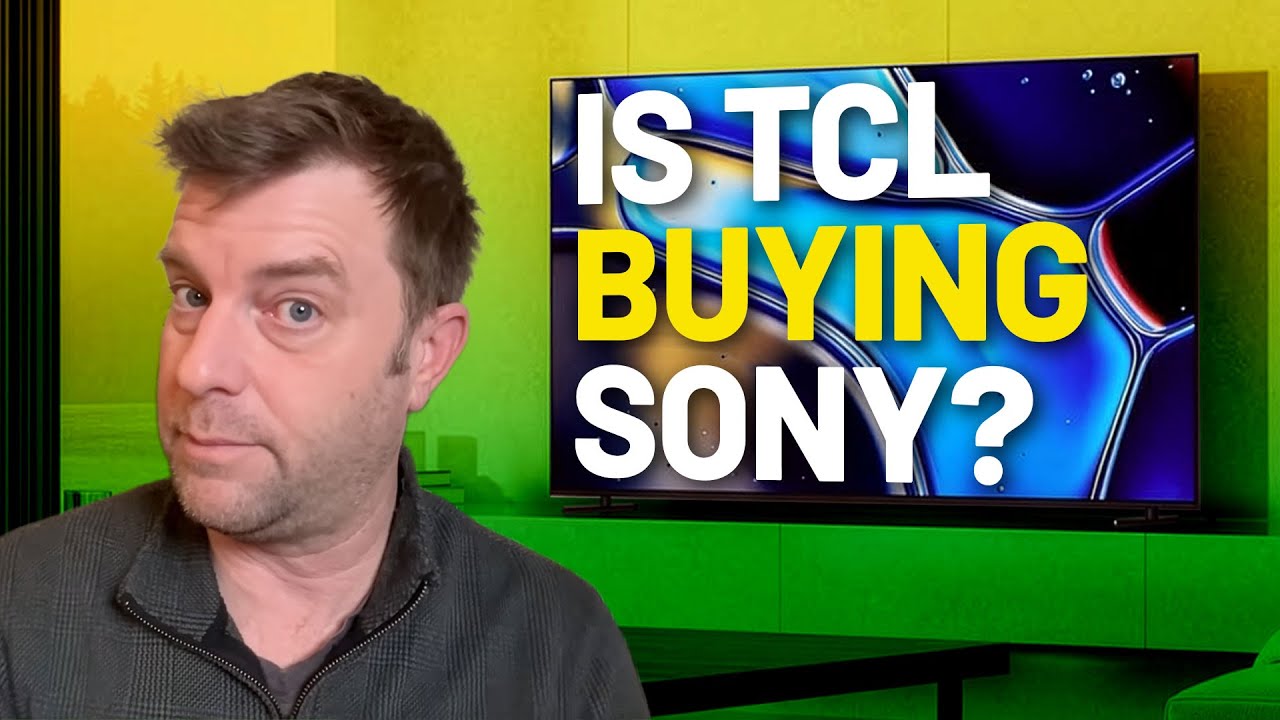
The headline "TCL is buying Sony" sounds alarming if you're a Bravia owner or a home theater enthusiast. But slow down — what actually happened is more nuanced, and the details matter a lot more than the clickbait version.
What the TCL–Sony Deal Actually Is
Sony and TCL have signed a memorandum of understanding (MOU) to form a joint venture. Under the proposed structure, TCL would hold a 51% controlling stake while Sony retains 49%. An MOU signals serious intent, but it is not a signed contract and it is not a done deal. Books still have to be opened, agreements finalized, and either side could walk away if they don't like what they find. It's happened before in this industry.
When You'd Actually Feel Any of This
Even if the deal closes without a hitch, the joint venture wouldn't formally take hold until April 2027. And because TVs for any given model year are designed and manufactured well in advance, industry analysts — and Caleb Denison, the TV reviewer who broke this down on his CalebRated channel — expect consumers won't feel the product-level impact until 2028 at the earliest. So if you're shopping for a Sony BRAVIA or a TCL set right now, nothing has changed.
Why Sony Needed a Partner
Sony's TV survival story is actually a comeback tale. After the 2011 tsunami devastated Japan's electronics sector, brands like Toshiba, JVC, and Panasonic quietly exited the US TV market. Sony doubled down on premium instead — a risky bet that paid off. Their edge has always been the system-on-chip (SOC): Sony's proprietary picture processing is what makes a Sony TV look like a Sony TV, not the panel itself.
But "doing well in the premium segment" and "healthy balance sheet" aren't the same thing. TCL, along with Hisense, has been aggressively eating into Samsung and LG's market share — the same disruption Japan once absorbed from South Korea. Sony likely needs manufacturing scale and capital, and TCL is one of the few companies positioned to provide both on a global level.
Will Sony TVs Still Be Sony TVs?
Almost certainly, yes — at least in the near term. The IP, the engineers, and the processing technology that define Sony's picture quality are not part of what's transferring. What TCL brings is manufacturing muscle and financial backing. A comparable example: Denon and Marantz have changed corporate hands multiple times (Sound United → Masimo → Harman/Samsung) and still make excellent, distinct products. Brand identity can survive ownership shifts when the underlying engineering stays intact.
The more interesting upside is what could go the other direction: TCL TVs quietly getting some of Sony's refinements baked in, and Sony TVs becoming slightly more accessible in price.
What to Watch Going Forward
Keep an eye on the official closing of the deal (expected sometime in 2026 or early 2027), any announcements about Sony's Bravia lineup post-merger, and whether TCL's mid-range sets start showing measurable picture processing improvements. Until then, the TV market is the TV market — buy the set that fits your budget and your room today, not the hypothetical one from 2028.
This article was created with AI help. If you want to watch the original video, please visit the link below.